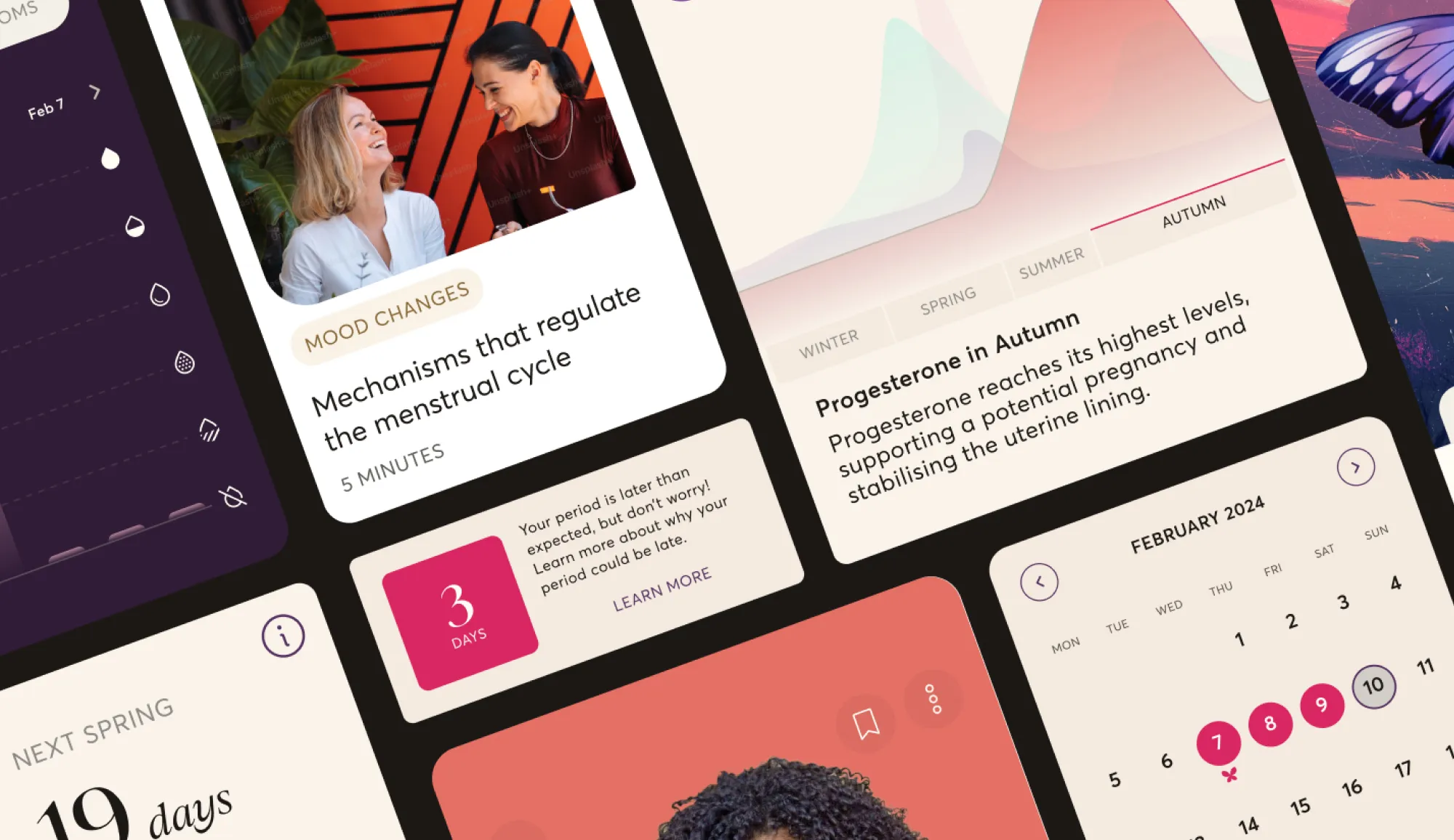
At 28X, user involvement is not a one-off research activity, it is a core part of how we design, build and improve the product.
From the earliest concept stages, we have followed best practice from the NHS Service Standard, alongside an ORCHA baseline review and alignment with international standard ISO 82304-2 requirements for health and wellbeing apps. These frameworks set a clear expectation: digital health tools must be shaped by real user needs, tested iteratively, and improved continuously.
The NHS Service Standard emphasises understanding users’ clinical, emotional and practical needs, designing inclusively, iterating frequently and being transparent about performance. We use these principles as a foundation, not a checklist, to guide how we gather and act on feedback throughout development.
We began user engagement at the idea and concept stage, working with young people through the Diana Award to explore attitudes, trust and expectations around menstrual health, research participation and digital tools. This helped us pressure-test assumptions before building features.
As the product evolved, we partnered with the Kent Surrey and Sussex Health Innovation Network to gather feedback on how 28X could support better conversations between users and clinicians. This ensured the app aligns with real-world care pathways and clinical realities, not just user preferences.
We have also worked with Wellbeing of Women on research-focused engagement, helping us design consent flows, educational content and participation features that are ethical, clear and trustworthy.
Our approach combines qualitative and quantitative methods, including:
• Facilitated focus groups
• One-to-one user interviews
• Anonymous, unaided testing via external user-testing platforms
• Expert review and clinical advisory feedback
• Informal friends-and-family testing for early usability signals
This mix allows us to capture both depth (how people feel, where confusion arises) and breadth (patterns, friction points, completion rates).
We treat feedback as a continuous input, not a milestone. Insights are reviewed regularly by the product and clinical teams, prioritised through agile delivery cycles, and fed directly into design and content updates.
We are also exploring longer-term partner-led feedback models to ensure sustained, representative involvement as 28X scales.
28X is still at an early stage, but user feedback already shapes how the app works, how information is presented and how safety and trust are designed in. By embedding recognised NHS and international standards from the start, we are building a platform that can grow responsibly with users at the centre, not at the margins.
.svg)